KnE Open Top Picks for August 2025
On September 8, 2025
As societies continue to adapt to rapid change, research is offering new perspectives on how people navigate health, education, and sustainability in complex environments. Recent studies highlight the need to rethink how we teach and learn, how technology can shape medical practice, and how traditional structures of governance influence equity and inclusion. Together, this month’s selected studies remind us that progress lies in innovation as well as in creating fairer, more inclusive structures that reflect diverse needs and experiences.

Can Philosophy Help Children Think More Critically?
Around the world, educators are paying closer attention to how children develop skills like critical thinking, creativity, and reflection, skills that are becoming just as important as reading or math in preparing the next generation for the future. One approach that has gained traction is Philosophy for Children (P4C), a programme designed to get young learners thinking more deeply about ideas, asking better questions, and engaging in meaningful dialogue with their peers. While this program has been studied in many different cultural and educational contexts, there is still much to learn about its impact in the Arab world. In Lebanon, for example, P4C has been introduced in some schools, but without a systematic evaluation of its methods or outcomes.
A recent study from Gulf Education and Social Policy Review highlights this gap, calling for more research to better understand how philosophy can support children’s learning and social development in the region.

Can Imaging Help Predict Surgical Success for Chronic Tailbone Pain?
Chronic tailbone pain, or coccydynia, is a condition that can affect daily life, often making simple activities a constant challenge. While many people find relief through conservative treatments, some require surgery, known as coccygectomy, to remove part or all of the coccyx. The challenge for doctors, however, is knowing which patients are most likely to benefit from this procedure. That’s where imaging technology comes in. Dynamic X-ray imaging, which captures the coccyx in both sitting and standing positions, has shown promise in detecting structural issues like hypermobility or instability that may be driving the pain.
A recent narrative review from the Journal of Spine Practice looks into whether these imaging findings can go beyond diagnosis and actually help predict surgical outcomes.

Can Smart Farming Make Chilli Production More Sustainable?
As the world looks for ways to balance food security with climate responsibility, agriculture is under growing pressure to adopt greener, more efficient practices. Traditional farming methods often rely heavily on water, fertilisers, and energy, resources that, when overused, contribute to greenhouse gas (GHG) emissions and environmental strain. At the same time, demand for crops like chilli peppers continues to rise, especially in regions such as Indonesia, where they are central to both diets and livelihoods. By using tools like soil sensors, automated irrigation, and precision fertiliser applications, farmers can optimise inputs, cut waste, and reduce carbon footprints while still boosting yields.
This study from KnE Life Sciences highlights how these innovations can transform chilli production into a model of low-carbon agriculture.

Are Doctors in Sudan Ready to Embrace AI in Healthcare?
Artificial Intelligence (AI) is reshaping healthcare around the world, offering tools that can improve diagnosis, personalise treatment, and expand access to care in underserved areas. From analysing scans with greater accuracy to supporting clinical decision-making, AI has the potential to ease the burden on healthcare systems that are stretched thin. For countries facing shortages of medical staff and limited infrastructure, these technologies could be especially transformative. In Sudan, where ongoing conflict and migration of doctors have further strained healthcare delivery, AI might help bridge critical gaps by providing cost-effective support and remote solutions, such as mobile health apps for maternal and childcare. Yet despite this potential, little research has explored how Sudanese doctors themselves view AI or how ready they are to adopt it in their daily practice.
A recent study from the Sudan Journal of Medical Sciences addresses this gap, examining their knowledge, attitudes, and concerns about using AI tools in Sudan’s medical system.
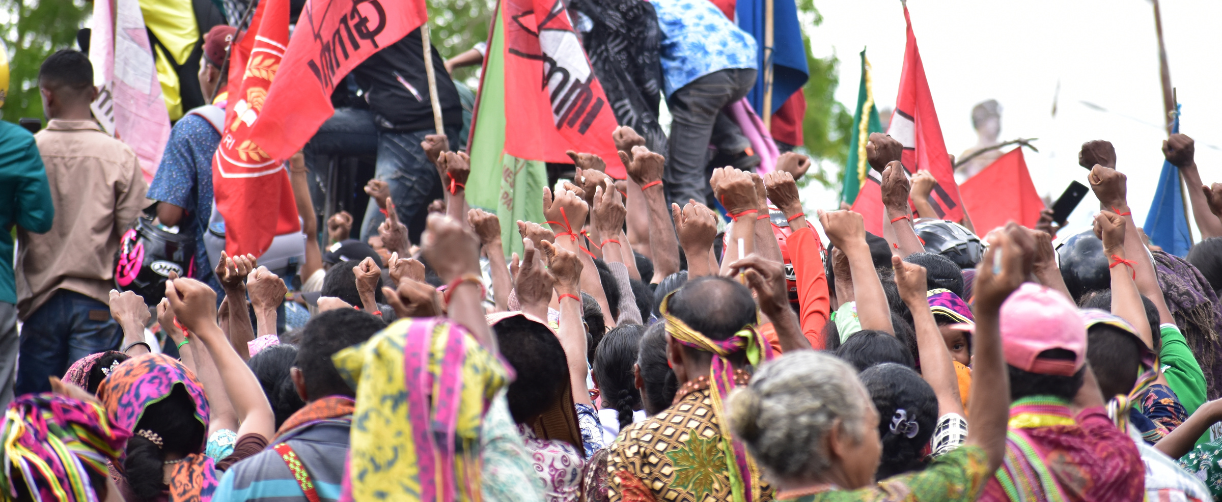
How Can Decolonial Governance Reshape Indigenous Rights?
Across many postcolonial states, the legacies of colonial power still shape governance, law, and the way indigenous communities are recognised. Even after independence, many countries inherited and preserved administrative systems that continue to marginalise indigenous knowledge, traditions, and rights. This imbalance often fuels conflict over land, resources, and cultural recognition, while also limiting indigenous voices in policymaking. Global frameworks like the UN Declaration on the Rights of Indigenous Peoples (UNDRIP) have helped raise awareness, but their implementation is often undermined by entrenched state structures that reproduce colonial dynamics in new forms. Decolonial governance offers a different path forward, calling not only for representation within existing systems but also for dismantling the colonial frameworks that continue to define state-community relations.
A recent study from KnE Social Sciences explores global research trends on this subject, highlighting how decolonial governance can support more equitable systems that centre indigenous voices in shaping policy and development.