When organising a conference, building a robust and engaging academic programme is the most important priority. You want create an interesting and useful event that will attract lots of delegates, comprised of valuable and thought provoking sessions delivered by excellent, knowledgeable speakers.
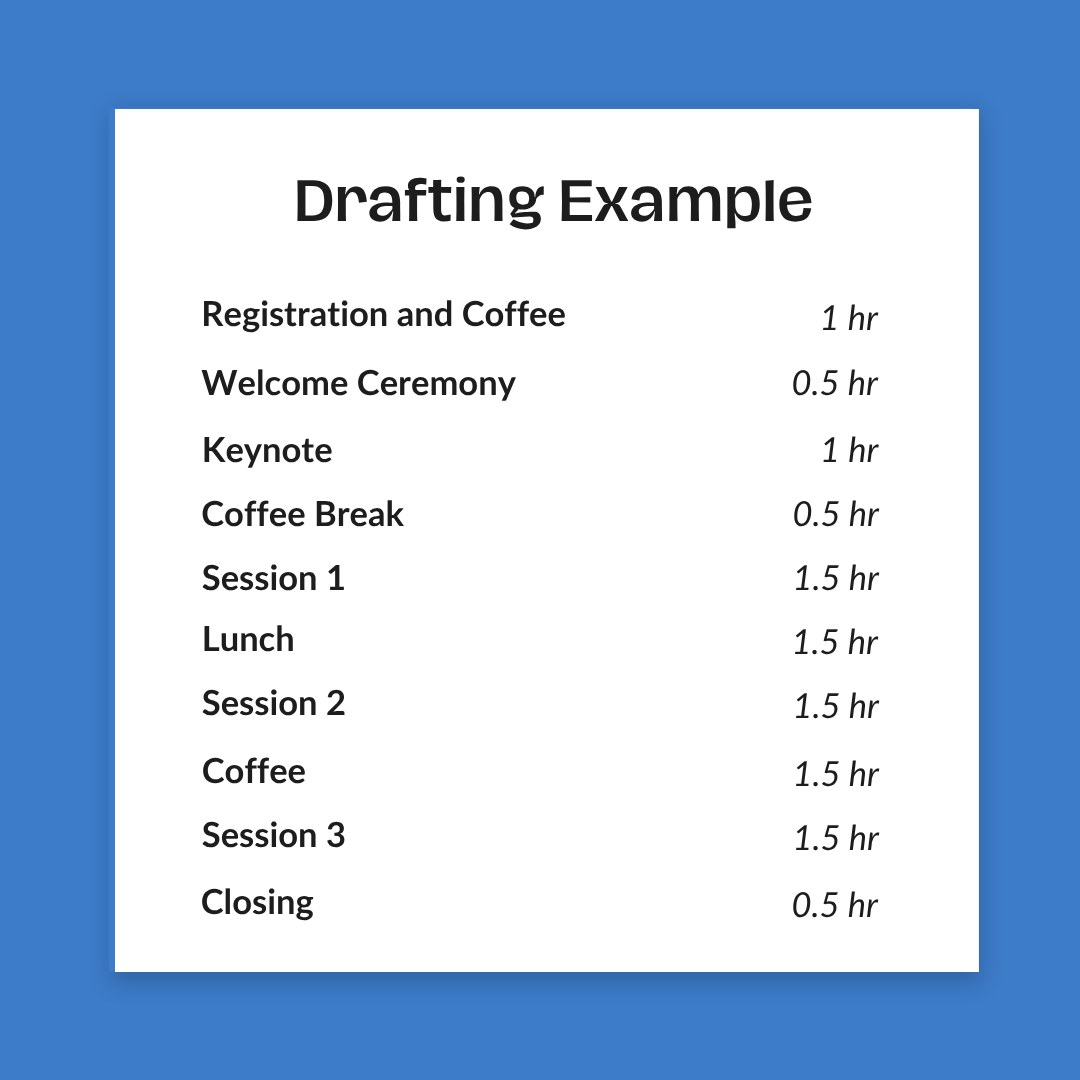
For most conferences, this programme will be a combination of invited speakers and responses to open calls for papers. So, the first thing you need to do is map out the overall outline of the event, complete with timings and available rooms at the venue, so you can work out how many speakers and sessions you can reasonably fit in.
KNE CLUE: THINGS TO CONSIDER WHEN DRAFTING THE PROGRAMME
Number of rooms
If you are considering parallel sessions, make sure you use rooms that are close together so delegates can easily move between the rooms and the coffee area
It is also important to avoid the appearance of favouritism, so make sure the rooms are all roughly the same size for parallel sessions
You can have a larger auditorium for the central sessions attended by everyone
Do not have too many parallel sessions, as there wont be enough people to ensure good attendee numbers in all the rooms, and speakers presenting to empty rooms will be disappointed
Exhibition areas
Are you considering sponsorship and exhibition booths?
If so, make sure the exhibition area is suitable for the sponsors, close to the lecture halls and located so as to ensure the delegates mingle there
Sharing space with the coffee break area is the best way to achieve this
Coffee breaks
While a packed programme is great, you need to allow the delegates time to breathe, to relax, to socialise, take comfort breaks and grab a coffee
It is important, therefore, to schedule a proper break between each session
We advise at least 30 minutes for a coffee break, and 1.5 hours for a lunch break
Timings
Identify reasonable start and end times for the event, and ensure that you have at least 2 hours on either side of this for setting up and shutting down (ie ensure the venue will allow you access)
Allow at least 1 hour for each keynote, and 1.5 hours for each panel with 3 individual papers, and if having roundtables make sure the time allocated is suitable for the number of people allotted to the panel to have a proper discussion (1 hour for 4 people, 1.5 hours for 6 people etc)
KNE CLUE: PLANNING SPEAKERS
Once you have a rough outline of the timings, and have identified the number of available rooms / parallel sessions, you can work out how many speakers are required.
The next stage is to build strong, interesting panel sessions where the papers are thematically aligned but present alternative view points – as this will help delegates decide which panels to attend, and also ensure an engaging and thought-provoking Q&A.
After your expert scientific committee has reviewed and evaluated the proposals, look at the highest-scoring papers and start to map out the connections and alignments
It is helpful here to use the designated conference themes as a starting point, and group the papers by these overarching themes, before breaking down to specific sub themes for individual panels
Create the various panels, and then map them to the programme to make sure the overall outline works and there are no glaring overlaps or panels repeating content already presented in another panel
But be prepared for some speakers you invite or accept to change their minds (withdrawing the paper, changing the title and focus, switching between online and in person attendance etc)
Tips
Make sure where you have multiple panels on the same thematic area, not to schedule them at the same time (as delegates interested in this topic will probably wish to attend all the relevant panels.
Make sure not to schedule all your high-prestige panels at the same time, as many people want to listen to all the VIP speakers.
It helps when reviewing the speaker submissions to have a list of the best second-tier proposals, and keep them as back-ups should any of the first-tier speakers pull out.